50th Anniversary of National Rehabilitation Week

From Scranton to a Nationwide Celebration: National Rehabilitation Week Marks 50 Years
In 2026, National Rehabilitation Week celebrates its 50th anniversary - a milestone with special meaning for Allied Services and Northeastern Pennsylvania, where the observance first began.
Each September during the third week of the month, National Rehabilitation Week shines a light on the life-changing power of rehabilitation. Celebrated September 14 – 20 in 2026, this year’s theme, “Building Futures Through Rehabilitation” is a fitting sentiment for this monumental landmark 50 years in the making. As the observance celebrates five decades, Allied Services is also reflecting on a remarkable legacy that began right here in Scranton, Pennsylvania.
It Started in Scranton
In 1976, Allied Services organized what would become Rehabilitation Week as a company-wide picnic for staff, patients, residents and families. The original gathering centered on something that remains at the heart of rehabilitation today: celebrating patient progress, recognizing the professionals who make recovery possible and raising awareness of what rehabilitation can help people achieve.
What began as a local observance continued each September and steadily grew beyond Northeastern Pennsylvania.
Through continued advocacy by Allied Services leadership and the formation of the National Rehabilitation Awareness Foundation, the movement gained broader recognition. The foundation helped promote the benefits of physical rehabilitation, recognize individuals who had experienced meaningful recovery and educate medical organizations and communities about the importance of rehabilitation.
A major milestone came in 1993, when President Bill Clinton issued a presidential proclamation designating the third week in September as National Rehabilitation Week, helping bring national attention to an observance that had begun in Scranton nearly two decades earlier.
In 1996, Allied Services acted as the national sponsor of Rehab Week when it coincided with the Paralympic Games in Atlanta, presenting national and regional awards to the honorees, alongside Regis Philbin, the week’s honorary chairperson. Throughout the years there have been many national champions for physical rehabilitation, including Presidents George H. W. Bush and Bill Clinton, as well as Heather Whitestone, the first deaf Miss America.
The observance has consistently highlighted individuals who have challenged perceptions of disability, overcome barriers and demonstrated the possibilities created through rehabilitation.
Fifty years later, National Rehabilitation Week is celebrated across the country - but its roots remain firmly connected to Allied Services and Northeastern Pennsylvania.
Why National Rehabilitation Week Matters
Rehabilitation can begin at some of the most challenging moments in a person’s life - following a stroke, spinal cord injury, traumatic brain injury, amputation, major illness, surgery or other conditions that affects movement, communication or independence.
Recovery is rarely the work of one person or one discipline. National Rehabilitation Week recognizes the broad team of professionals who help patients move forward, including physical therapists, occupational therapists, speech-language pathologists, physiatrists, rehabilitation nurses, rehabilitation counselors, social workers, therapy assistants and many others.
The week is also about the patients and families whose determination gives rehabilitation its purpose. Every regained step, improved movement, clearer word or return to a meaningful activity represents progress that can have an enormous impact on everyday life.
After 50 years, the mission remains much the same as it was in 1976: raise awareness of rehabilitation, recognize the people who provide it and celebrate the outcomes that show what recovery can make possible.
Fifty Years of Progress
The field of rehabilitation has changed dramatically since the first Rehabilitation Week.
Therapists today continue to rely on the expertise, compassion and individualized care that have always been central to rehabilitation, but they also have access to technologies that earlier generations of clinicians could only imagine.
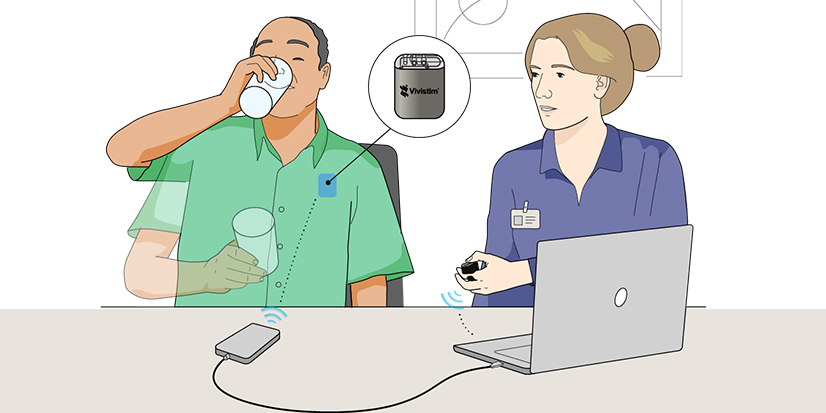
At Allied Services, rehabilitation technology now includes Vivistim, an FDA-approved medical device that combines vagus nerve stimulation with rehabilitation therapy to help eligible stroke survivors improve hand and arm function.
Patients working to regain standing and walking abilities may benefit from technologies such as Rise&Walk, an advanced 3-in-1 robotic rehabilitation station designed for individuals with neurological and mobility impairments. The technology can be used with both adult and pediatric patients.
Anti-gravity treadmills allow patients to reduce the amount of body weight placed through their lower extremities while walking or running, providing another option for safely rebuilding mobility, endurance and confidence following an injury or neurological event.
Powered lower-limb exoskeletons can also assist rehabilitation teams in delivering individualized, task-specific over-ground gait training.
Beyond mobility, Allied Services utilizes a variety of technologies supporting speech, communication, vision and other areas of rehabilitation, giving clinicians more tools to tailor therapy to the individual needs and goals of each patient.
The technology has evolved. The objective has not: helping people achieve the greatest possible level of function and independence.
A Rehabilitation Legacy Beyond Rehab Week
Allied Services' impact on rehabilitation extends far beyond the observance it helped begin.
In 1992, Allied Services launched the Riverside Rumble in the Wilkes-Barre and Kingston area, recognized as the world's first wheelchair-only road race.
The event began as a national 10K championship and, after its first five years, reached international status in September 1997 as a World Championship 10K race. Elite wheelchair athletes came to Northeastern Pennsylvania to compete, helping promote athletic opportunity, inclusion and greater visibility for people with disabilities.
Allied Services' rehabilitation programs have also earned national recognition for clinical performance and patient outcomes. The Allied Services Scranton Rehabilitation Hospital was recognized as the #1-ranked inpatient rehabilitation facility in the United States in 2013, and both the Scranton and Wilkes-Barre rehabilitation hospitals have received Uniform Data System for Medical Rehabilitation Top Performer recognition for ranking among leading rehabilitation facilities nationally.
The organization's rehabilitation legacy is also helping shape the future workforce.
Today, Allied Services partners with The Wright Center for Graduate Medical Education, Northeast Rehab Associates and Tenor Health in a community-based Physical Medicine & Rehabilitation Residency Program.
The first of its kind in the region, the Physical Medicine & Rehabilitation Residency Program gives medical graduates the training necessary to become independently practicing physicians. Allied Services serves as a primary training site for the program, with residents completing many of their required clinical rotations at our rehabilitation hospitals.
In June 2026, the PM&R program celebrated its first graduating class of five physicians.
Building the Next 50 Years
A great deal has changed since Allied Services first gathered patients, families and employees to celebrate rehabilitation in 1976.
Treatment techniques have advanced. Technology has expanded what therapists and patients can accomplish together. Rehabilitation medicine has become increasingly specialized, collaborative and sophisticated. New generations of clinicians are learning in environments that combine decades of experience with emerging technology and research.
Yet the reason for celebrating National Rehabilitation Week has remained remarkably consistent.
Rehabilitation is about helping people move forward.
It is about helping someone take another step after a stroke, regain the use of an arm, communicate more effectively, return home safely, participate in the community or achieve a goal that once seemed out of reach.
As Allied Services celebrates the 50th anniversary of National Rehabilitation Week, we are proud to remember where the observance began, recognize how far the field of rehabilitation has come and celebrate the patients, families and professionals who continue to demonstrate its power every day.
Allied Services’ Vice President of Inpatient Rehabilitation, Karen Kearney, LCSW, MSW, puts it best, saying “I have had the privilege of participating in National Rehabilitation Week for 44 of its 50 years, and it gives me great pride to be part of an organization dedicated to helping countless members of our community.”
“Our comprehensive rehabilitation team brings expertise, compassion, and dedication to helping people living with chronic and disabling conditions achieve their greatest potential. We are committed to providing high-quality, compassionate, and cost-effective rehabilitation services in both inpatient and outpatient settings.”
She adds, “After 44 years, I am truly honored and grateful to have been part of this journey and to have contributed to an organization that makes such a meaningful difference in the lives of so many people.”
From Scranton to a nationwide celebration, the legacy that began in 1976 continues - building futures through rehabilitation.